
Metabolic research
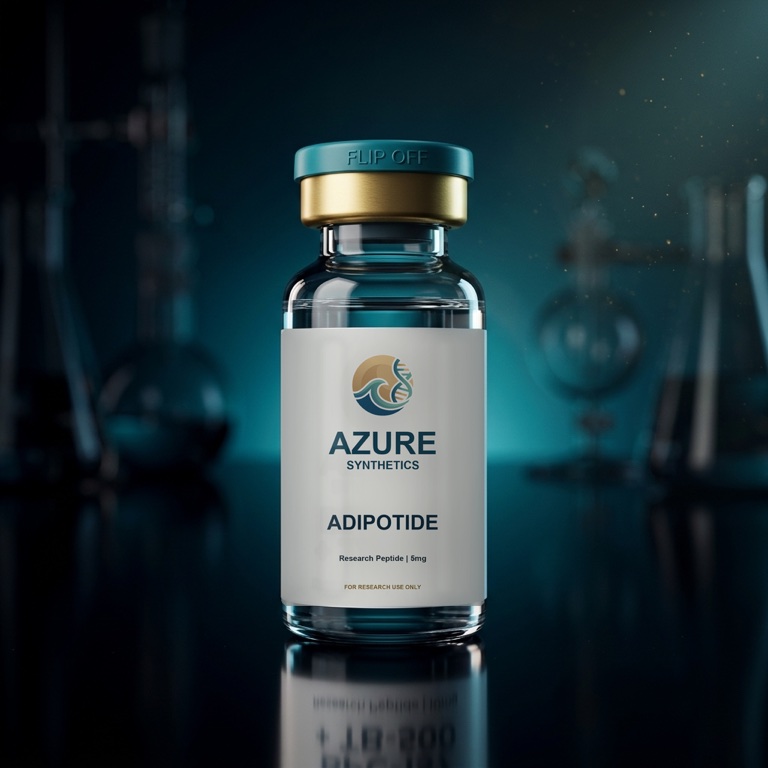
Adipotide
Lyophilized metabolic research compound
Adipotide is a prohibitin-targeting peptidomimetic studied for adipose vasculature signaling in metabolic research, including preclinical and primate obesity literature.
Support can confirm any currently available COAs or batch documentation for this product.
Request available documentsConfirm an optional email signup to receive a single-use 10% welcome code.
Get catalog updates仅供实验室研究使用。不适用于人类或兽医用途。并非旨在诊断、治疗、治愈、减轻或预防疾病。
Keep sealed, cold, dry, and protected from heat swings. Confirm product-specific storage on arrival.
Packed for transit stability with order support available for warm-weather routes.
Batch-linked certificate support is available through the documentation desk.
研究背景
Adipotide 研究资料
Adipotide is a targeted peptidomimetic investigated in preclinical metabolic research. Its design links a prohibitin-binding sequence associated with white-adipose vasculature to a pro-apoptotic peptide cargo, allowing researchers to examine targeted vascular disruption, adipose-tissue changes, metabolic markers, and safety observations. Published work includes animal and nonhuman-primate models, with renal findings forming an important part of the experimental record. This material is most relevant to projects studying targeted adipose-vasculature biology rather than incretin receptors, AMPK signaling, or conventional appetite pathways. There is no established human therapeutic evidence, and results should not be generalized beyond the cited models.
Molecular class
Bifunctional targeted peptidomimetic
Sequence / composition
A prohibitin-binding homing motif linked to a D-amino-acid pro-apoptotic cargo; it is not a native signaling peptide.
Research design note
Studies distinguish target binding, cellular uptake, vascular localization, and cargo-driven effects with separate controls.
拟议机制
A targeted peptidomimetic that combines a prohibitin-binding motif associated with white-adipose vasculature and a pro-apoptotic D-peptide cargo. The proposed mechanism is selective damage to supporting blood vessels in white fat, followed by loss of adipose tissue.
研究中报告的作用
- Rodent and obese-primate studies reported reduced food intake, loss of body mass and fat mass, and improved insulin-sensitivity markers.
- Histologic studies reported apoptosis and vascular disruption in targeted white-adipose tissue.
- Renal tubular changes and other kidney-related safety findings were important adverse observations in primate research.
常见研究终点
Prohibitin binding, vascular targeting, apoptosis, adipose mass, food intake, body mass, insulin sensitivity, renal chemistry, urinalysis, and kidney histology.
证据与局限
Evidence is preclinical, including nonhuman primate work. There is no established human therapeutic evidence, and renal findings are a material limitation.
External reading
Literature for context—not product proof.
Third-party sources describe their own research materials and methods. They do not validate a specific Azure catalog batch.
Support and documentation
Questions about this product?
Where can I find product documentation?
Contact support with the product name and any relevant order or batch reference to request available documents.
How can I compare pack options?
Where multiple pack sizes are available, Azure shows the price per listed vial so you can compare catalog value directly.