
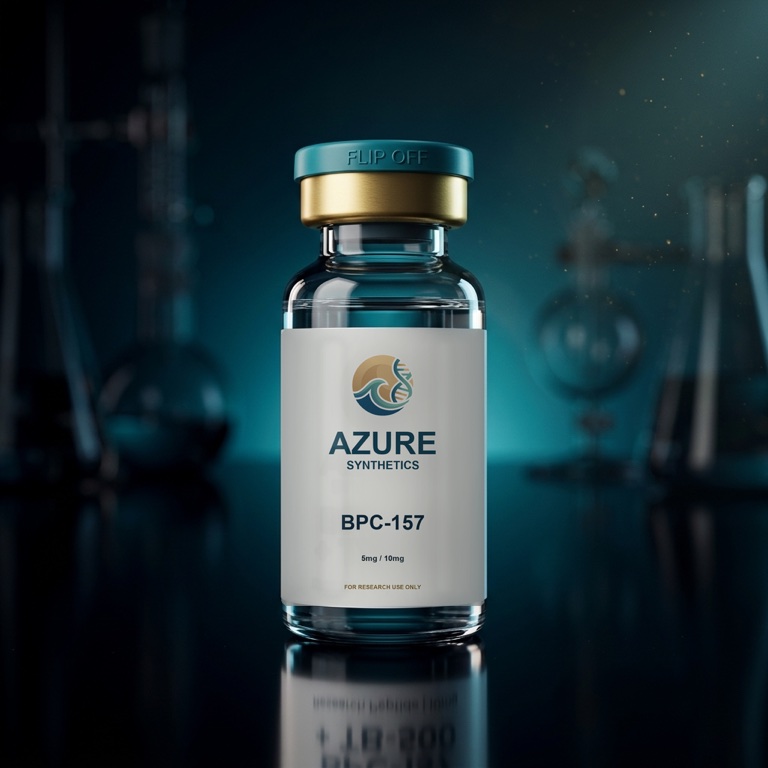
Tissue-signaling research
BPC-157
Lyophilized tissue-signaling peptide for preclinical pathway research
BPC-157 is a tissue-signaling research peptide discussed in preclinical tissue-stress, gastrointestinal, tendon, and wound-model literature. Human evidence remains limited.
This product has an available COA with reported batch details and test results.
Open available COAConfirm an optional email signup to receive a single-use 10% welcome code.
Get catalog updatesSomente para uso em pesquisa laboratorial. Não é para uso humano ou veterinário. Não se destina a diagnosticar, tratar, curar, mitigar ou prevenir doenças.
Mantenha selado, frio, seco e protegido de oscilações de calor. Confirme o armazenamento específico do produto na chegada.
Embalado para estabilidade de trânsito com suporte para pedidos disponível para rotas em clima quente.
Batch-linked certificate support is available through the documentation desk.
Contexto de pesquisa
Perfil de pesquisa de BPC-157
BPC-157 is a synthetic pentadecapeptide discussed primarily in preclinical tissue-signaling literature. Researchers have examined gastrointestinal, tendon, ligament, muscle, vascular, and wound models, with proposed involvement of nitric-oxide signaling, angiogenesis, fibroblast activity, inflammatory mediators, and extracellular-matrix responses. The breadth of proposed mechanisms is larger than the quality of the human evidence, which remains very limited. BPC-157 is therefore most appropriate for controlled laboratory or animal-model comparisons where endpoints and controls are clearly defined. It should not be presented as an established recovery treatment, and findings from individual preclinical models should not be generalized to people or to a specific catalog batch.
Molecular class
15-residue gastric pentadecapeptide
Sequence / composition
- G
- E
- P
- P
- P
- G
- K
- P
- A
- D
- D
- A
- G
- L
- V
Defined amino-acid chain, shown in standard one-letter notation.
Research design note
No single validated primary receptor has been established, so identity, model choice, and pathway controls are especially important.
Mecanismo proposto
No single validated receptor has been established. Proposed mechanisms include modulation of nitric-oxide signaling, VEGF-related angiogenesis, FAK-paxillin and cytoskeletal signaling, fibroblast migration, inflammatory mediators, and gastrointestinal protective pathways.
Efeitos relatados em estudos
- Rodent studies reported faster closure or improved histologic outcomes in selected tendon, ligament, muscle, skin, nerve, and gastrointestinal injury models.
- Preclinical studies reported changes in angiogenesis, fibroblast migration, nitric-oxide-related responses, and inflammatory markers.
- Reliable human outcome data are extremely limited, and animal repair findings have not established clinical effectiveness.
Desfechos comuns de pesquisa
Wound closure, tensile strength, collagen organization, fibroblast migration, vascular density, VEGF and nitric-oxide markers, inflammatory cytokines, gastrointestinal lesions, and histology.
Evidências e limitações
The evidence is overwhelmingly preclinical, with heterogeneous models and proposed pathways. Mechanism and human safety remain uncertain.
External reading
Literature for context—not product proof.
Third-party sources describe their own research materials and methods. They do not validate a specific Azure catalog batch.
Support and documentation
Questions about this product?
Where can I find product documentation?
Open the direct COA link on this page. For other batch documents, contact support with the product name and any relevant order or batch reference.
How can I compare pack options?
Where multiple pack sizes are available, Azure shows the price per listed vial so you can compare catalog value directly.