
GH-axis research
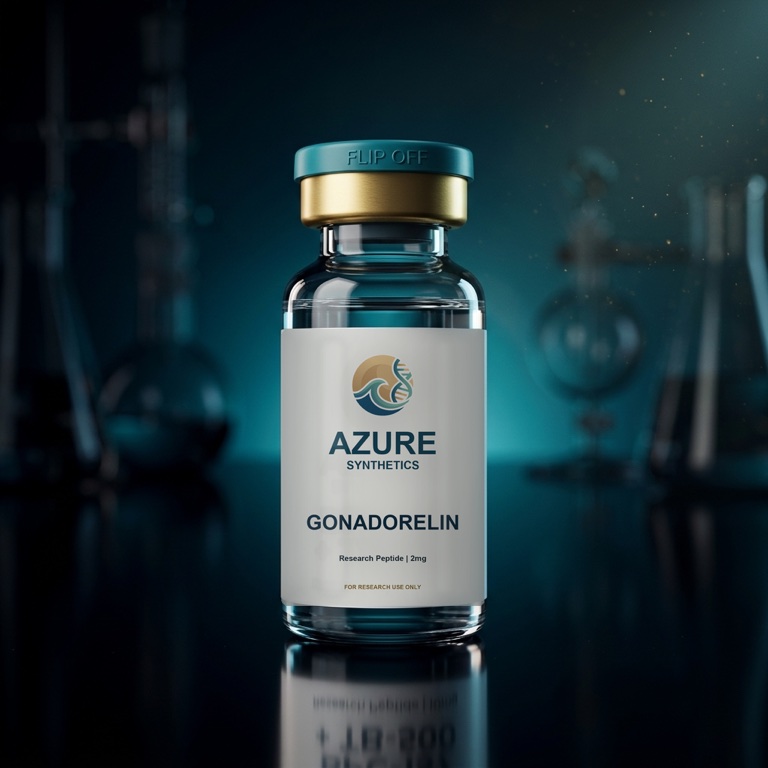
Gonadorelin
Lyophilisiertes Peptid zur Forschung zu endokrinen Signalen zur Systemüberprüfung
Gonadorelin is a GnRH decapeptide research compound used as a reproductive-axis signaling reference.
Support can confirm any currently available COAs or batch documentation for this product.
Request available documentsConfirm an optional email signup to receive a single-use 10% welcome code.
Get catalog updatesNur für Laborforschungszwecke. Nicht für den menschlichen oder veterinärmedizinischen Gebrauch bestimmt. Nicht zur Diagnose, Behandlung, Heilung, Linderung oder Vorbeugung von Krankheiten bestimmt.
Verschlossen, kalt, trocken und vor Hitzeschwankungen geschützt aufbewahren. Bestätigen Sie die produktspezifische Lagerung bei der Ankunft.
Verpackt für Transportstabilität mit Bestellunterstützung für Routen bei warmem Wetter.
Batch-linked certificate support is available through the documentation desk.
Forschungskontext
Gonadorelin Forschungsprofil
Gonadorelin is the synthetic form of the native ten-amino-acid gonadotropin-releasing hormone sequence. It is used to study GnRH-receptor activation at the pituitary, luteinizing-hormone and follicle-stimulating-hormone release, pulse-frequency biology, receptor desensitization, and hypothalamic-pituitary-gonadal axis signaling. It differs from kisspeptin-10, which acts upstream through KISS1R to influence GnRH neurons. Gonadorelin is therefore the direct choice when an experiment requires a defined GnRH receptor input or endocrine-response reference. Human diagnostic and pharmacology literature exists for regulated products, but those records do not verify the quality or intended use of a catalog research material.
Molecular class
Native GnRH decapeptide
Sequence / composition
pGlu-His-Trp-Ser-Tyr-Gly-Leu-Arg-Pro-Gly-NH2; a 10-amino-acid hypothalamic peptide.
Research design note
Pulse timing and receptor desensitization are central variables in GnRH-receptor research.
Vorgeschlagener Mechanismus
A synthetic form of native GnRH that binds the pituitary GnRH receptor and activates Gq, phospholipase C, calcium, and protein-kinase-C signaling. Pulsatile exposure stimulates LH and FSH release, while continuous exposure can cause receptor desensitization.
In Studien berichtete Effekte
- Acute human studies report release of LH and FSH and use the response to examine pituitary and reproductive-axis function.
- Pulse frequency and amplitude can differentially influence LH and FSH secretion in experimental systems.
- Continuous or repeated non-pulsatile exposure can reduce gonadotropin response through receptor downregulation and desensitization.
Häufige Forschungsendpunkte
GnRH receptor signaling, intracellular calcium, LH, FSH, pulse frequency, sex-steroid feedback, receptor desensitization, and pituitary responsiveness.
Evidenz und Grenzen
Native GnRH physiology and human diagnostic responses are well characterized. Outcomes depend strongly on exposure pattern and biological context.
External reading
Literature for context—not product proof.
Third-party sources describe their own research materials and methods. They do not validate a specific Azure catalog batch.
Support and documentation
Questions about this product?
Where can I find product documentation?
Contact support with the product name and any relevant order or batch reference to request available documents.
How can I compare pack options?
Where multiple pack sizes are available, Azure shows the price per listed vial so you can compare catalog value directly.