
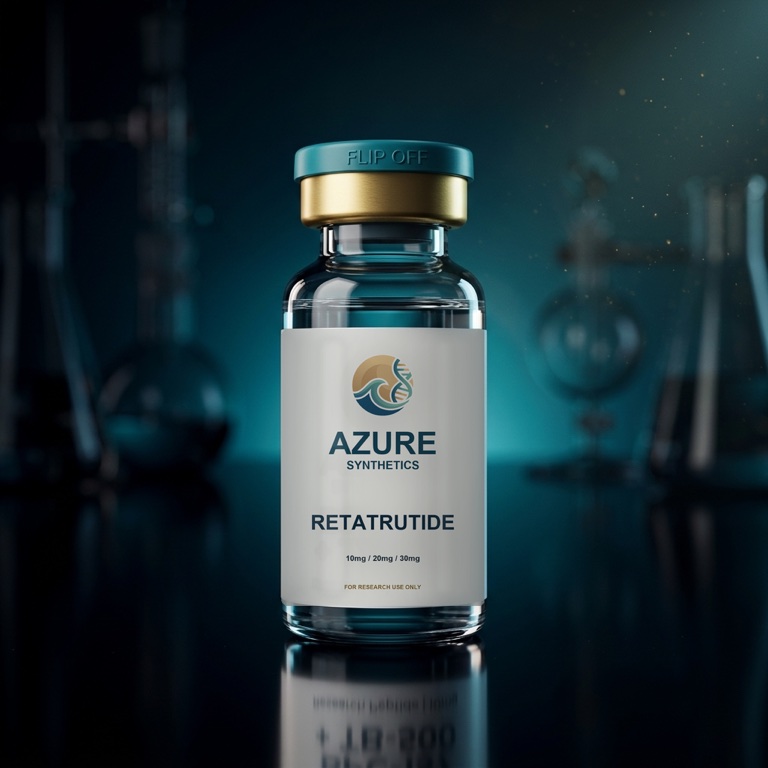
Metabolic research
GLP-3 (RT) Peptide
Lyophilized metabolic research compound
GLP-3 (RT) Peptide is Azure’s catalog name for a retatrutide metabolic research peptide studied as a triple agonist at GIP, GLP-1, and glucagon receptors. Published studies provide receptor-pharmacology and dose-ranging context for this molecular class.
This product has an available COA with reported batch details and test results.
Open available COAConfirm an optional email signup to receive a single-use 10% welcome code.
Get catalog updatesFor laboratory research use only. Not for human or veterinary use. Not intended to diagnose, treat, cure, mitigate, or prevent disease.
Mantener sellado, frío, seco y protegido de los cambios de calor. Confirme el almacenamiento específico del producto a su llegada.
Empaquetado para estabilidad en tránsito con soporte de pedidos disponible para rutas en climas cálidos.
Batch-linked certificate support is available through the documentation desk.
Contexto de investigación
Perfil de investigación de GLP-3 (RT) Peptide
GLP-3 (RT) Peptide is Azure’s catalog name for a retatrutide research material, a single peptide studied for agonist activity at the GIP, GLP-1, and glucagon receptors. Research commonly compares receptor potency, signaling balance, pharmacokinetics, glucose and lipid markers, energy expenditure, and body-mass endpoints across cell, animal, and controlled human studies. Its main distinction is the addition of glucagon-receptor activity to the incretin pathways represented by GIP and GLP-1. This makes it useful when a project needs a triple-agonist reference rather than the dual-receptor profile associated with tirzepatide. Published human trial results describe the investigated pharmaceutical molecule and do not establish the identity or performance of a catalog batch.
Molecular class
39-residue acylated multi-receptor agonist
Sequence / composition
A 39-amino-acid engineered backbone with non-native substitutions and a C20 fatty-diacid side chain.
Research design note
The lipid side chain is used in pharmacology research to prolong exposure; receptor activity is studied across GIPR, GLP-1R, and GCGR.
Mecanismo propuesto
Proposed triple agonism at the GIP, GLP-1, and glucagon receptors. GIPR and GLP-1R signaling is associated with glucose-dependent insulin secretion and appetite-related pathways, while GCGR activity adds hepatic and energy-expenditure signaling. The balance of activity across all three receptors is central to the molecule.
Efectos reportados en estudios
- Cell and animal studies report activation of all three receptor pathways, reduced food intake, improved glucose handling, and increased energy expenditure.
- Phase 2 human studies reported dose-dependent reductions in body weight and improvements in selected cardiometabolic markers.
- Gastrointestinal adverse events and treatment discontinuations were also reported in controlled human studies.
Criterios de investigación comunes
Receptor potency and bias, cyclic AMP response, food intake, energy expenditure, glucose and insulin markers, lipids, body mass, pharmacokinetics, and tolerability observations.
Evidencia y limitaciones
Mechanistic, animal, and controlled human evidence exists for the investigational pharmaceutical molecule. Those results do not verify a separate catalog batch or guarantee an experimental result.
External reading
Literature for context—not product proof.
Third-party sources describe their own research materials and methods. They do not validate a specific Azure catalog batch.
Support and documentation
Questions about this product?
Where can I find product documentation?
Open the direct COA link on this page. For other batch documents, contact support with the product name and any relevant order or batch reference.
How can I compare pack options?
Where multiple pack sizes are available, Azure shows the price per listed vial so you can compare catalog value directly.
Keep comparing
Compare other catalog records.
Explore related research materials. These are not a combined-use recommendation.
-
Metabolic
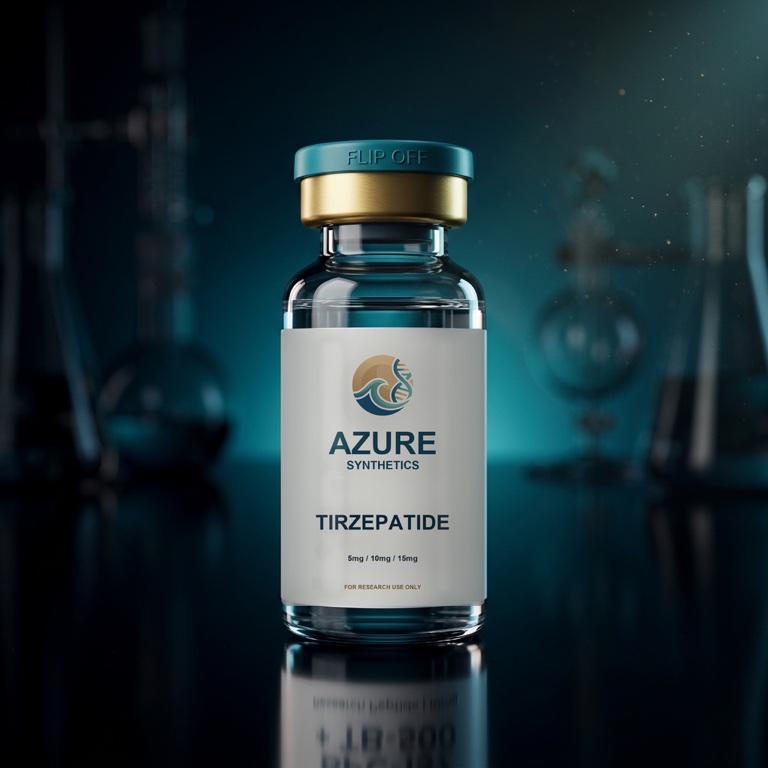
Tirzepatide
Tirzepatide is a dual GIP / GLP-1 receptor agonist reference point in metabolic research and comparative incretin pharmacology.
- Formato
- Polvo liofilizado
- Cantidad
- 30 mg
Rango de precios: desde 104.99 $ hasta 930.99 $ Seleccionar opciones Este producto tiene múltiples variantes. Las opciones se pueden elegir en la página de producto -
Metabolic

Mazdutide
Mazdutide sits in the GLP-1 / glucagon dual-agonist research lane, where interest centers on incretin signaling, energy expenditure, and metabolic markers.
- Formato
- Polvo liofilizado
- Cantidad
- 10 mg
Rango de precios: desde 138.99 $ hasta 590.99 $ Seleccionar opciones Este producto tiene múltiples variantes. Las opciones se pueden elegir en la página de producto