
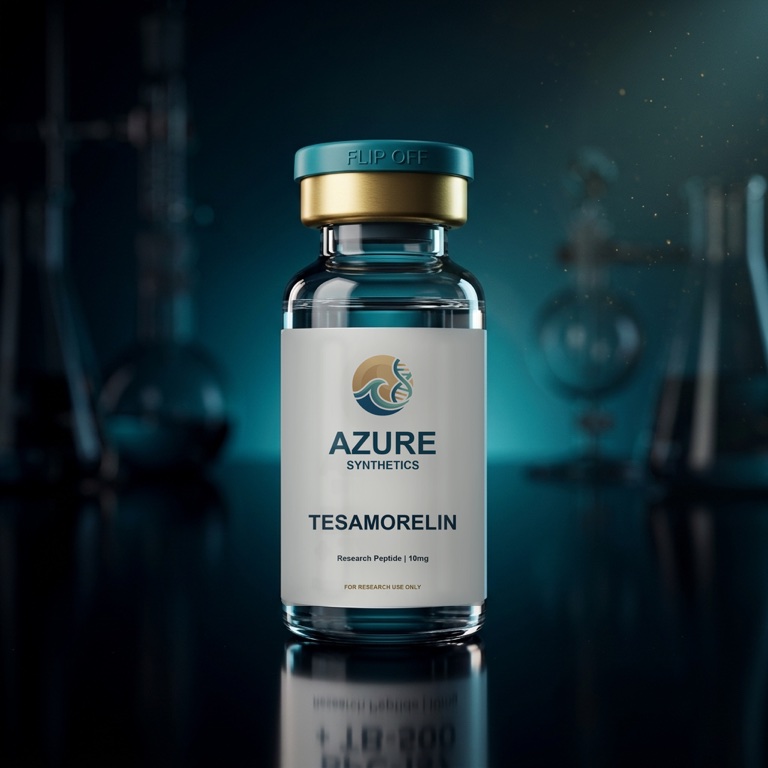
Metabolic research
Tesamorelin
Lyophilized metabolic research compound
Tesamorelin is a stabilized GHRH analog with published pharmacology and controlled-study literature on GH-axis signaling.
Support can confirm any currently available COAs or batch documentation for this product.
Request available documentsConfirm an optional email signup to receive a single-use 10% welcome code.
Get catalog updatesFor laboratory research use only. Not for human or veterinary use. Not intended to diagnose, treat, cure, mitigate, or prevent disease.
Keep sealed, cold, dry, and protected from heat swings. Confirm product-specific storage on arrival.
Packed for transit stability with order support available for warm-weather routes.
Batch-linked certificate support is available through the documentation desk.
Research context
Tesamorelin research profile
Tesamorelin is a stabilized analog of growth hormone-releasing hormone studied for its activity at the pituitary GHRH receptor. Research evaluates stimulated and pulsatile GH release, downstream IGF-1 markers, pharmacokinetics, endocrine feedback, and body-composition or metabolic endpoints in controlled settings. It differs from ghrelin-receptor secretagogues such as ipamorelin and GHRP compounds because it acts through the GHRH pathway. It also differs from shorter GHRH references such as sermorelin in sequence design and pharmacologic duration. Tesamorelin is a useful choice when a project needs a documented GHRH analog with human pharmacology literature, while keeping catalog material separate from any approved pharmaceutical product.
Molecular class
44-residue stabilized GHRH analog
Sequence / composition
An engineered 44-amino-acid peptide based on the amino-terminal signaling region of human growth-hormone-releasing hormone.
Research design note
Its substitutions are intended to improve stability while retaining GHRH-receptor pharmacology for GH-axis studies.
Proposed mechanism
A stabilized GHRH analog that activates the pituitary GHRH receptor, increasing cyclic AMP and stimulating pulsatile growth-hormone secretion. Downstream GH receptor signaling increases hepatic and peripheral IGF-1 production and influences lipid and carbohydrate metabolism.
Effects reported in studies
- Human studies reported increased GH and IGF-1 markers and reductions in visceral adipose tissue in the populations studied.
- Controlled studies also reported changes in liver-fat, body-composition, and selected lipid markers.
- Glucose intolerance, edema, injection-site reactions, arthralgia, and elevated IGF-1 are relevant reported or monitored effects.
Common research endpoints
GHRH receptor response, GH pulse amplitude, IGF-1, visceral and liver fat, waist measures, glucose tolerance, lipids, body composition, pharmacokinetics, and adverse events.
Evidence and limitations
Mechanistic and controlled human evidence exists for regulated tesamorelin products. A research catalog product is not represented as an approved or equivalent medicine.
External reading
Literature for context—not product proof.
Third-party sources describe their own research materials and methods. They do not validate a specific Azure catalog batch.
Support and documentation
Questions about this product?
Where can I find product documentation?
Contact support with the product name and any relevant order or batch reference to request available documents.
How can I compare pack options?
Where multiple pack sizes are available, Azure shows the price per listed vial so you can compare catalog value directly.