
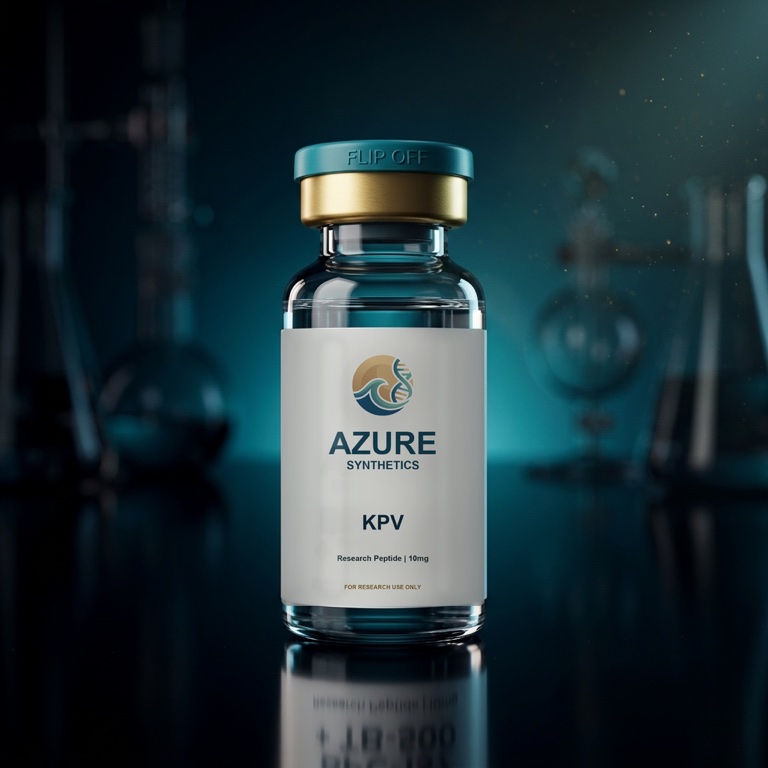
Immune research
KPV
Lyophilized immune-signaling research peptide for pathway review
KPV is an alpha-MSH fragment research peptide studied around epithelial integrity, immune signaling, and inflammatory-pathway models.
Support can confirm any currently available COAs or batch documentation for this product.
Request available documentsConfirm an optional email signup to receive a single-use 10% welcome code.
Get catalog updatesFor laboratory research use only. Not for human or veterinary use. Not intended to diagnose, treat, cure, mitigate, or prevent disease.
Mantener sellado, frío, seco y protegido de los cambios de calor. Confirme el almacenamiento específico del producto a su llegada.
Empaquetado para estabilidad en tránsito con soporte de pedidos disponible para rutas en climas cálidos.
Batch-linked certificate support is available through the documentation desk.
Contexto de investigación
Perfil de investigación de KPV
KPV is the tripeptide Lys-Pro-Val, a short fragment derived from the carboxyl end of alpha-melanocyte-stimulating hormone. Preclinical research examines epithelial integrity, cytokine signaling, inflammatory-pathway markers, microbial interactions, and gut or skin model systems. Unlike broader melanocortin analogs, KPV is generally studied for fragment-specific activity and may not reproduce the full receptor profile of alpha-MSH. It is a focused choice for projects comparing short melanocortin-derived peptides in epithelial or immune-signaling experiments. Evidence is primarily laboratory and animal based, and reported pathway effects depend on the model, concentration, formulation, and endpoints used in the original study.
Molecular class
Alpha-MSH-derived tripeptide
Sequence / composition
- K
- P
- V
Defined amino-acid chain, shown in standard one-letter notation.
Research design note
Its short sequence and proposed transporter-dependent cell entry make uptake and stability useful assay controls.
Mecanismo propuesto
A Lys-Pro-Val tripeptide derived from the C-terminal region of alpha-MSH. Proposed actions include cell entry through peptide transport systems and suppression of NF-kappaB, MAPK, cytokine, and microbial-response pathways, sometimes independently of classical melanocortin receptors.
Efectos reportados en estudios
- Cell studies reported reduced activation of inflammatory transcription pathways and lower production of selected cytokines.
- Animal and epithelial models reported reduced inflammation or tissue injury in selected gut, skin, and infection-related experiments.
- Mechanism, transport, and potency vary by model, and controlled human evidence is not established.
Criterios de investigación comunes
NF-kappaB and MAPK activation, cytokines such as TNF-alpha and IL-6, epithelial permeability, histology, microbial growth, peptide transport, and tissue-injury scores.
Evidencia y limitaciones
Evidence is primarily cell and animal based. Human pharmacokinetics, efficacy, and safety remain insufficiently characterized.
External reading
Literature for context—not product proof.
Third-party sources describe their own research materials and methods. They do not validate a specific Azure catalog batch.
Support and documentation
Questions about this product?
Where can I find product documentation?
Contact support with the product name and any relevant order or batch reference to request available documents.
How can I compare pack options?
Where multiple pack sizes are available, Azure shows the price per listed vial so you can compare catalog value directly.